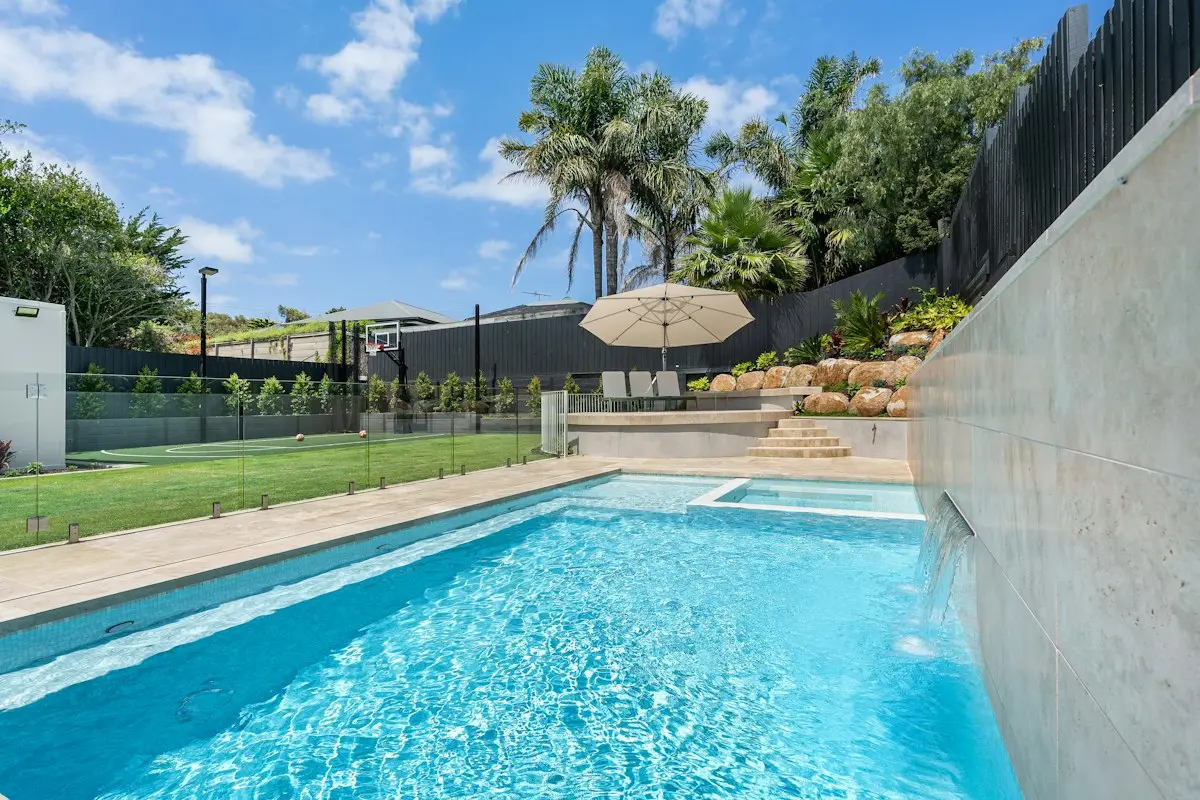
What should you budget?
Prepare the intended water outline and feature list. Ask qualified providers to assess the property and define the shell design, excavation, equipment, finishes and surrounding work.
The model is a broad water-area benchmark across pool types, not a fiberglass-, gunite- or vinyl-specific quote. Confirm actual water dimensions, depth, equipment and site conditions. Raised features, walls and elevated decks need explicit assessed scope. The starter area is an editable nominal rectangular assumption, not a site measurement or verified product geometry.
Remodaro illustrative planning assumption per square foot for new in-ground pool. The exact work in this guide can fall outside that broader scope.
Use the planner above to choose the work you actually want, enter your area or quantity and identify your project ZIP. The result shows a starting target alongside the wider planning range. For ZIPs we can resolve, the model uses a disclosed state-level regional price factor. The target is a budgeting aid, and actual contractor proposals depend on specifications and site conditions.
Compare equal gunite construction packages
Use matching dimensions, depth and features across bids. Ask which site work, utility connections and restoration are included. Keep the editable 288-square-foot assumption distinct from a verified design and the broad model’s mix of pool types.
What to include in your first quote request
Provide the pool layout and equipment priorities. Ask for explicit design, shell, finish and surrounding-work inclusions.
What changes the cost of this project?
- Pool type, dimensions and depth
- Excavation, soil and equipment access
- Decking, barriers and utility connections
Mark the proposed water area separately from decking, access routes and equipment. Contractors need to know how excavation equipment will reach the site. For an existing pool, distinguish cosmetic wear from a leak or structural problem. Get the surrounding safety and site work included explicitly in the proposal.
Build a scope that contractors can price
Make a short list of the work you want included and photograph the existing condition. Record approximate dimensions, access restrictions and anything you want to retain. Keep product names or inspiration images with the brief, but let the installer confirm final dimensions before anything is ordered. This gives every bidder the same starting information.
Rock excavation, extensive decking, landscaping, barriers and unusual utility runs may be outside the benchmark.
Ask for unknown work to be identified as an allowance or a unit-priced repair. Before accepting a change, request the reason, the price and the effect on the schedule in writing. Set a separate contingency based on the age and condition of the home and the uncertainty the contractor identifies, rather than treating every possible repair as already included.
Choose the contractor as carefully as the materials
Reviews can help you find candidates, but a star rating cannot verify the scope, credentials or availability for your home. Ask about projects similar to this one and check current licensing where required, insurance and recent references. Confirm who supervises the work and which trades are involved.
- Compare the same pool shell, equipment and surrounding work.
- Ask how excavation surprises and access restrictions are priced.
- Confirm local barrier, electrical and inspection requirements before work starts.
Compare written proposals using the same checklist
| Ask each contractor | What to look for |
|---|---|
| Scope and materials | Named products, quantities and exclusions |
| Permits and inspections | Who obtains approvals and schedules checks |
| Timeline | Start conditions, delivery dependencies and completion stages |
| Payment and changes | Written milestones and approval for extra work |
| Warranty and handover | Workmanship terms, product documents and contact details |
Before the first visit, ask whether the on-site quote is free and whether design work or investigative work has a separate fee. Remodaro’s optional matching request is free for homeowners. After you submit your project and phone number, we can review availability and look for up to three suitable contractors. A match or visit needs confirmation before it is arranged.
Common planning questions
Does a rectangular footprint establish every part of a gunite pool budget?
No. The actual design and site scope need assessment. Request a detailed construction proposal rather than treating water area as the complete specification.
Can I start with a smaller project?
Yes. The pools planner includes focused work as well as larger projects. Compare the intended scope with another option before committing. Inspection-dependent work gets a project brief so a broad remodel price is not mistaken for a repair quote.
How does my ZIP affect the estimate?
We look up the city and state associated with the ZIP. Where a regional factor is available, we apply the documented state price index as a planning proxy. It measures general price differences, not actual contractor bids in your neighborhood. Scope, access and the condition of your home still need an on-site evaluation.
Do I have to hire a contractor through Remodaro?
No. You can keep the estimate and checklist. The optional phone form requests help reviewing local contractor availability, and there is no obligation to accept a proposal.
Plan your project with a clearer starting point.
Get my personalized plan →Homeowner reference — Federal Trade Commission guidance on hiring for home improvement. This reference supports the hiring checklist. Prices are Remodaro illustrative planning assumptions, not FTC price data.